
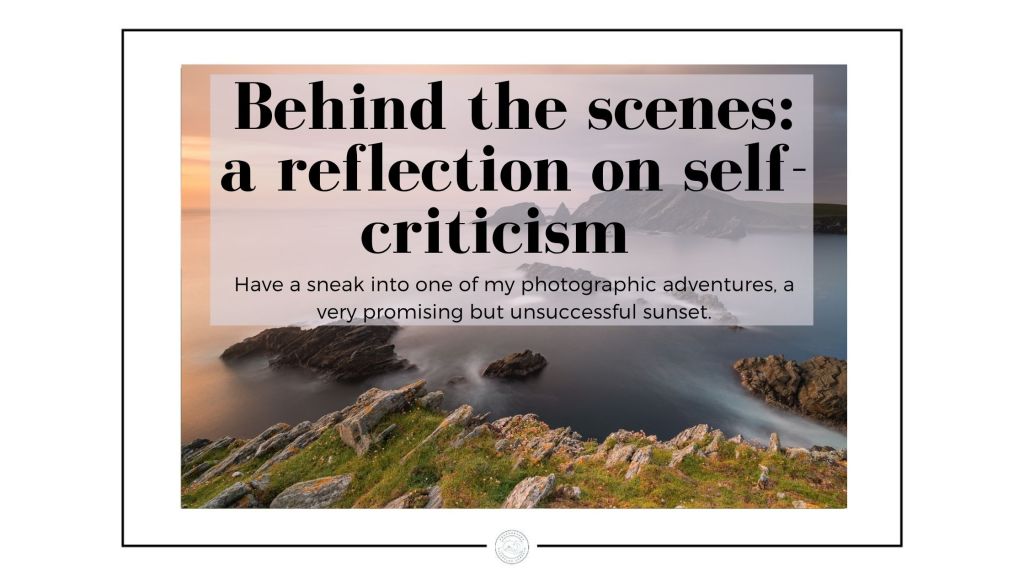
Have a sneak into one of my photographic adventures, a very promising but unsuccessful sunset
ARTICOLO IN ITALIANO QUI
I don’t like this photo. Every photographer should be the first to promote their work in a way that makes it look like its best, right? Yet I just can’t convince myself that this is a successful photo. I’ve always been very critical of my photography work, but there are some photos of mine that I look at, and think are exactly how I wanted them, whether they appeal to the outside eye or not. For me, those are still very successful photos because they convey exactly what I wanted to communicate, even with perhaps all the details that could be improved that, in my opinion, are always there.
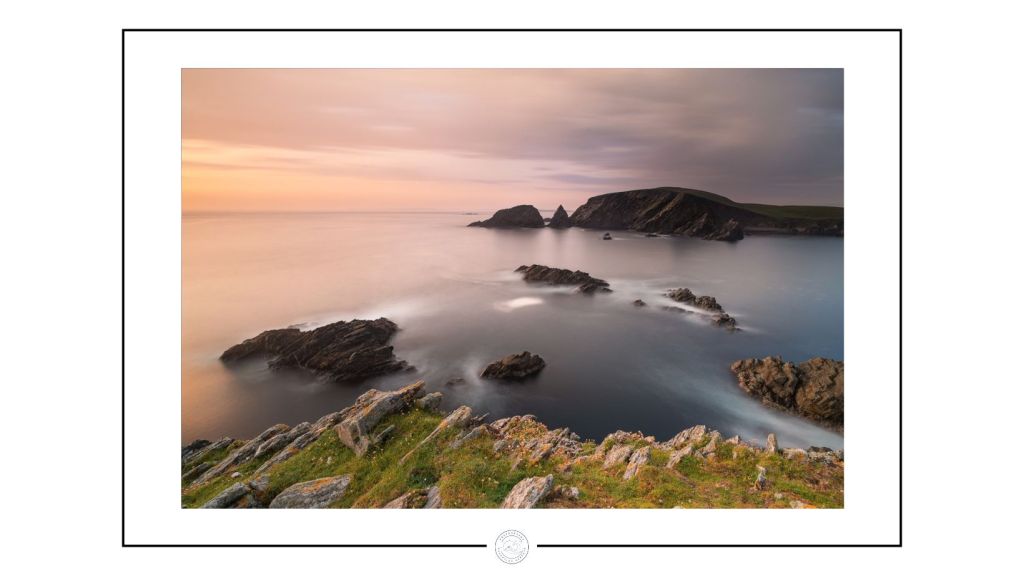
But let’s proceed in order: I took this photo during a trip I took to the Shetland Islands, which started off on the wrong foot from the start. The weather was absolutely terrible; either the sky was completely cloudless or completely overcast, with no light whatsoever. However, the evening I took this photo, the forecast seemed excellent, so after a rather short trek, I armed myself with patience. At a certain point, it starts to rain, and the sky behind me becomes gloomy and extremely defined, perfect for a photo. It’s a shame that compositionally, the landscape was definitely not that great. Same thing when a rainbow appeared to my right, above a pasture, while the area I had identified for composition? A few sporadic clouds at the bottom of the scene and a huge hole at the top.
The photo, of course, I took it anyway, but the lack of clouds at the top caused the light to reflect off the sea, bringing it to that grayish, slightly dull color. Add to that, the lack of side light because the clouds behind covered the horizon, and the sea that was way too calm, and you’re done!
The importance of self-criticism
I find photos like this to be extremely important from the point of view of your photographic growth; they teach you to understand what went wrong and how to improve an image. In this case, light and weather were crucial in the photo’s failure. Not changing the scene still helped to have a pleasant image because if I had moved, I would probably have had nice weather conditions but an unusable composition.
Self-criticism is one of the most powerful engines for a photographer’s growth, but it is a double-edged sword that must be handled with balance. Without the ability to objectively evaluate one’s work, it is almost impossible to progress, but excessive severity, like all excesses, can be equally detrimental to creativity.
What might come in handy, however, is recognizing what went wrong for the next shot; could I do something about adverse weather? Unfortunately, no, but the thing I’m glad I did was identify the best composition at that moment, which transformed an unsuccessful photo into at least a pleasant one.
Self-criticism stops being useful when it turns into hypercriticism and prevents us from showing what we create for fear that it won’t be perfect enough, even though the ultimate goal should always be to love what you’re doing and appreciate the time spent outdoors taking photos.
If you look at your shots of recent years with a critical eye, you will notice patterns: recurring errors, but also constant details such as, for example, the use of a certain light, a predilection for certain types of details, a certain way of composing. Recognizing them allows you to take those strengths and use them to create your own unique and recognizable style, transforming a shot from a random act to a purely intentional gesture.
And so, a bad photo turns into an attempt to communicate something with my shooting style, which even if it failed due to adverse weather still remains something of mine and personal, which could not have been made in any other way.
To conclude, therefore, the moments when a photo does not come out as we had hoped are welcome (although, at the moment we all know that the first reaction is not strictly philosophical!) because they helps us grow and develop our own well-defined and recognizable shooting style, always bringing home the best that photography can give us.


