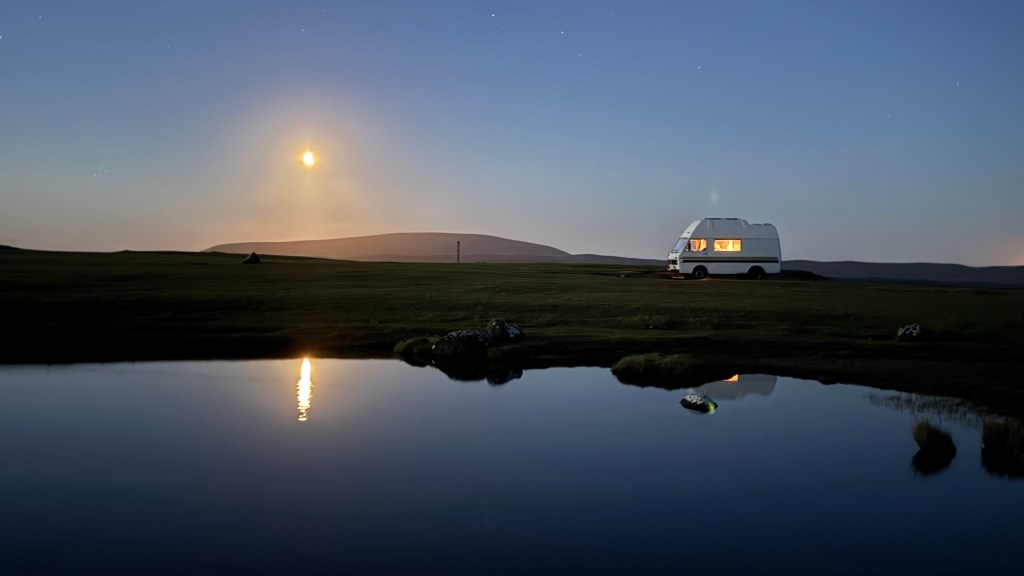
What travelling in a 1978 camper van taught me
Articolo in italiano QUI
I was born into a family of outdoors lovers and spent my childhood vacations among caravans, campers, and various campsites, and this inclination for the outdoors remained firmly with me into adulthood. With my life partner, I’ve spent the summers of recent years wandering as much as possible (as far as our adult jobs allow) throughout Europe, from Corsica and Sardinia to the remote Orkney Islands or the Lofoten archipelago, along with our faithful Fiat Doblò converted to a micro-van.
Last year, thanks to our love of quite cold and windy places that are rather unsuitable to staying out of the car for long, and the latter being particularly small, we decided to take the plunge and try to buy a camper. As much as we would have gladly oriented ourselves towards a van camper, unfortunately spending half the value of our house on a camper was not within our budget and so we decided to orient ourselves towards something with a decidedly more vintage taste, absolutely convinced that everything would go smoothly (spoiler no!).
The preparation: how to face 5000 km
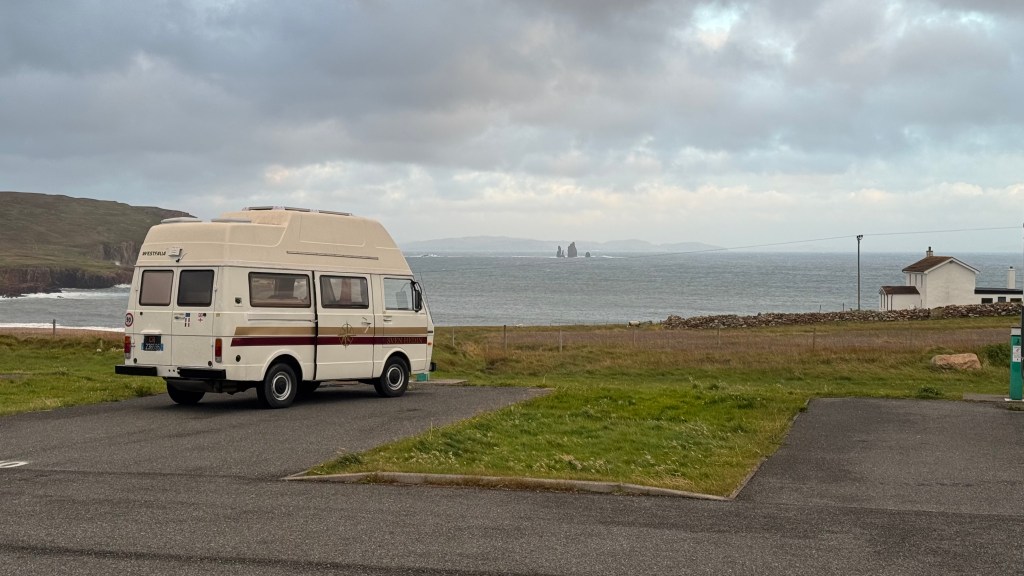
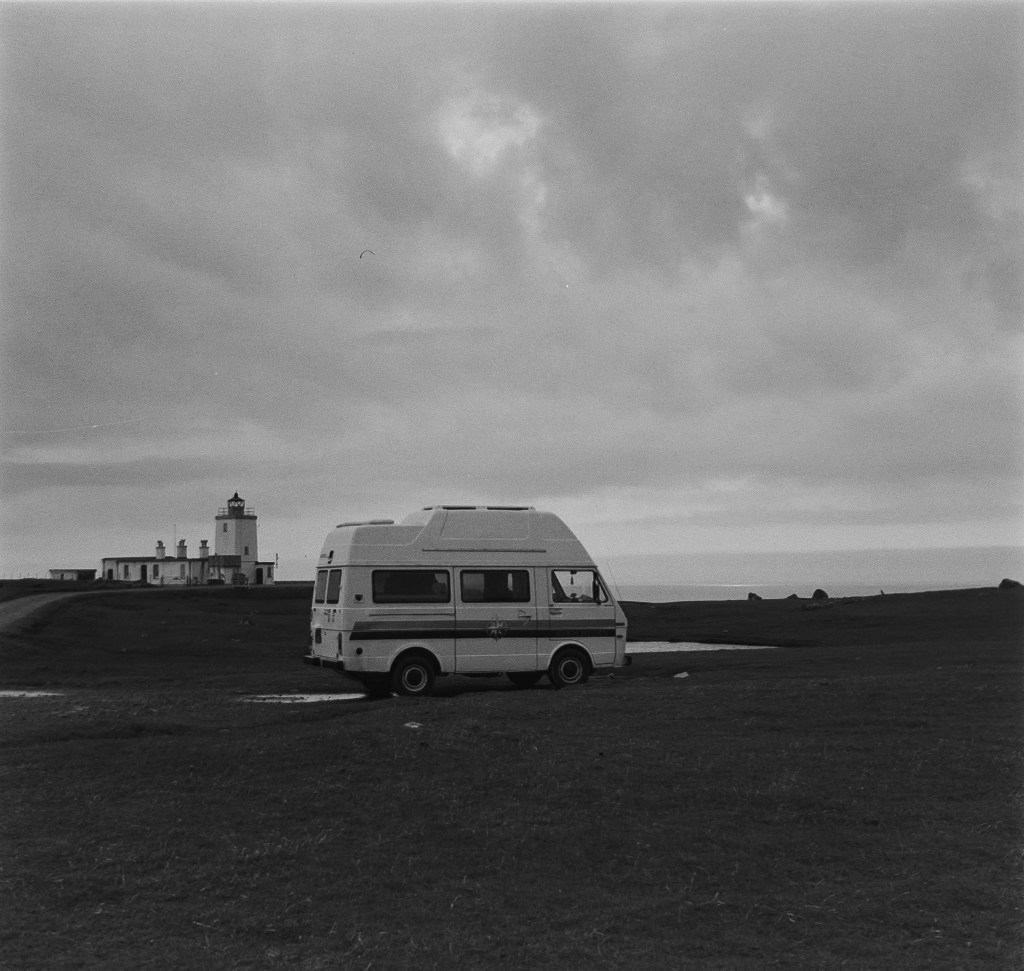
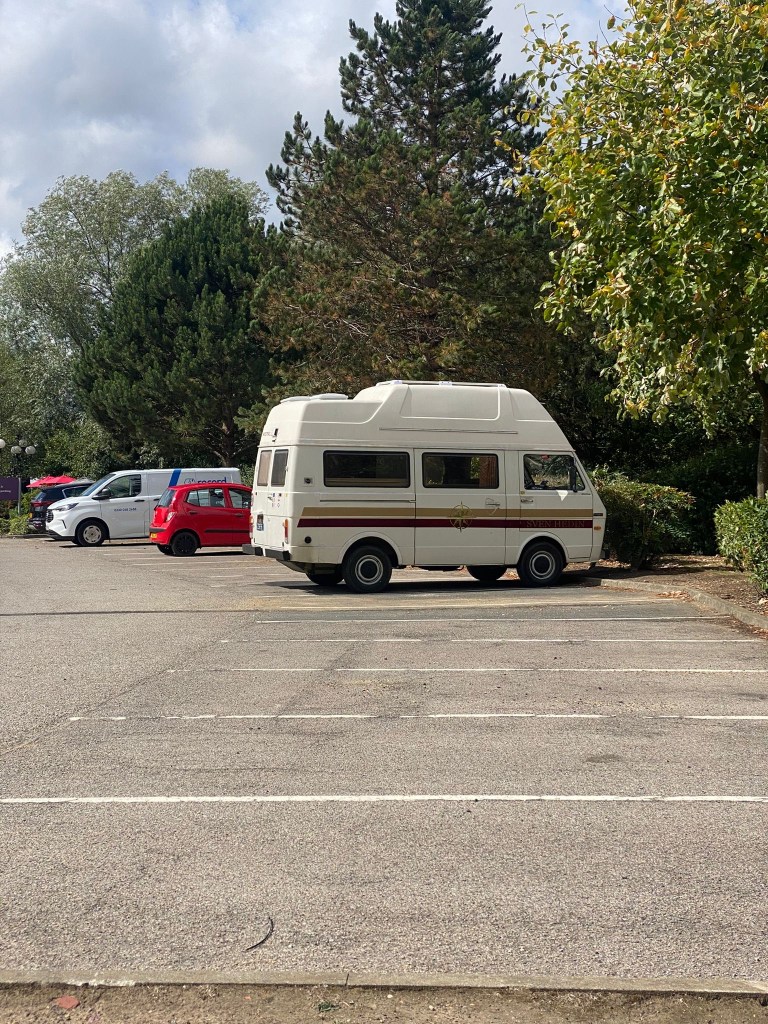
Since neither of us knows the half-measures, as soon as we got our hands on our 1978 Westfalia Sven Heidin, we decided to take it to the Shetland Islands, probably trusting in the protection of the famous explorer to whom our new vehicle owed its name. Time to prepare: 4 months.
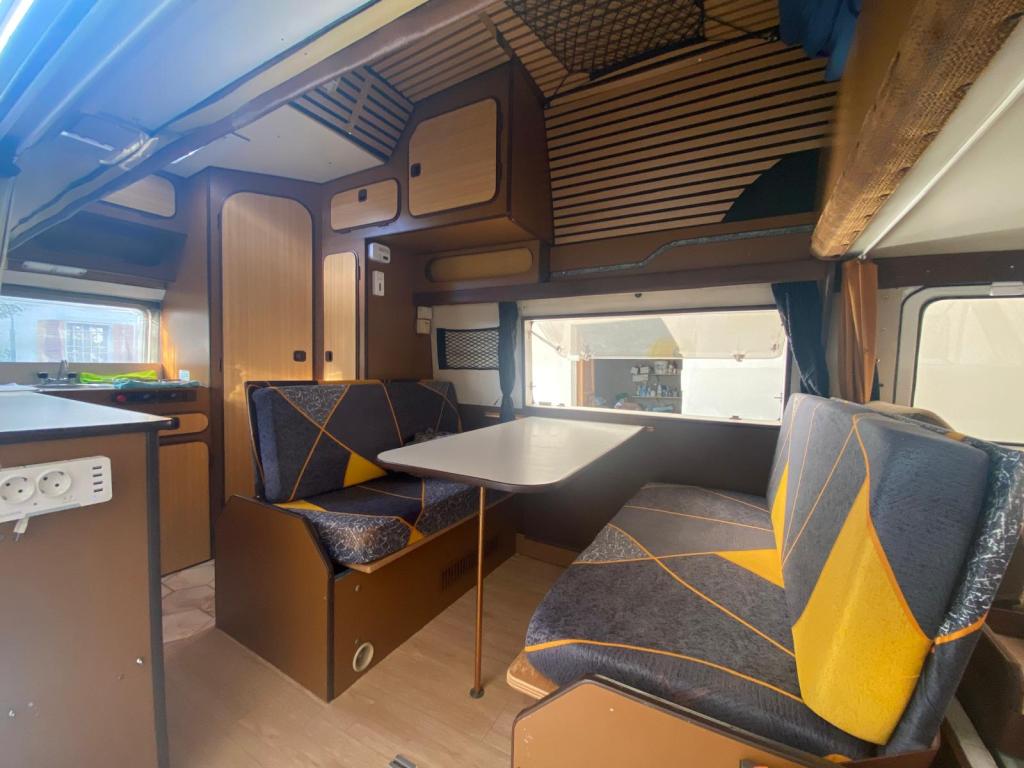
In these 4 months we ended being mechanics, upholsterers, solar panel and battery experts, carpenters and expert roof window changers, as well as tireless carpet cleaners (who probably hadn’t seen a clean since ‘78). We fixed gas cylinder fuel system failures, prevented a wasp invasion in the back, and changed all the lights, making the interior significantly more comfortable while retaining the iconic ‘70s look.
After completing all the tasks that came to mind and loading Sven with supplies, it was finally time to leave; the road was practically the same as the one we had taken the previous year to get to the Orkney Islands with our Fiat Doblò, even if we hadn’t really considered a small detail, namely that the Sven Heidin is a 4-gear vehicle with an estimated top speed of 90 km/h (which will actually prove to be a very optimistic estimate).
A very slow journey
From the first few kilometres one thing is definitely clear to us: Sven is the slowest vehicle we have ever set foot on. Which can be a wonderful perk for those who decide to take a relaxing holiday in the Tuscan hills but is perhaps not strictly ideal for those with exactly 26 days to travel 5,000 kilometres!
But we won’t get discouraged and face the almost daily 8 hours of driving with a few minor accidents along the way, like both batteries dead, until we reach the UK. After leaving the endless motorways of France behind we finally get to enjoy the English landscape and on the second day we arrive at one of my all-time favourite places: the Northumberland coast.
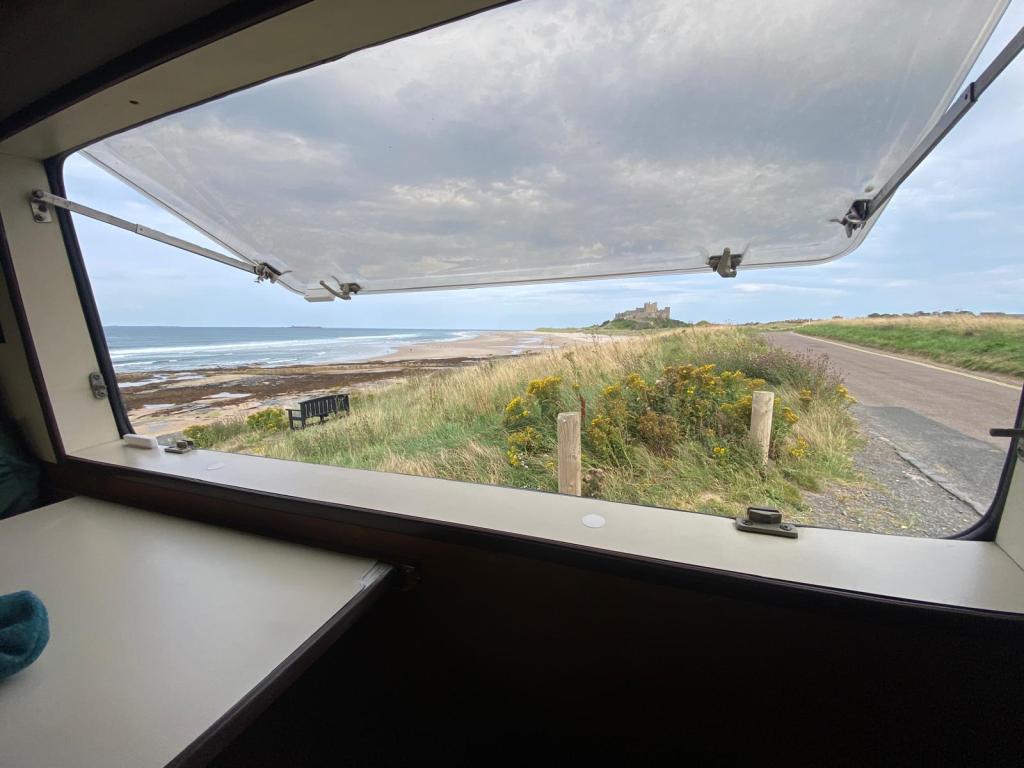
Here we spend one of the days I loved most about this trip. I have always had a particular attraction for this area and in particular for Bamburgh Castle, a place that besides having a remarkable scenic interest (and in fact every time I go there, I take several analogue photos) is also incredibly interesting from a historical point of view. Overlooking the sea and a very long sandy beach, Bamburgh Castle is an ancient, thousand-year-old fortress and the cradle of the kings of Northumbria. It combines centuries of history with breathtaking views, confirming itself as one of England’s most iconic and spectacular monuments, but is also definitely worth a visit inside.
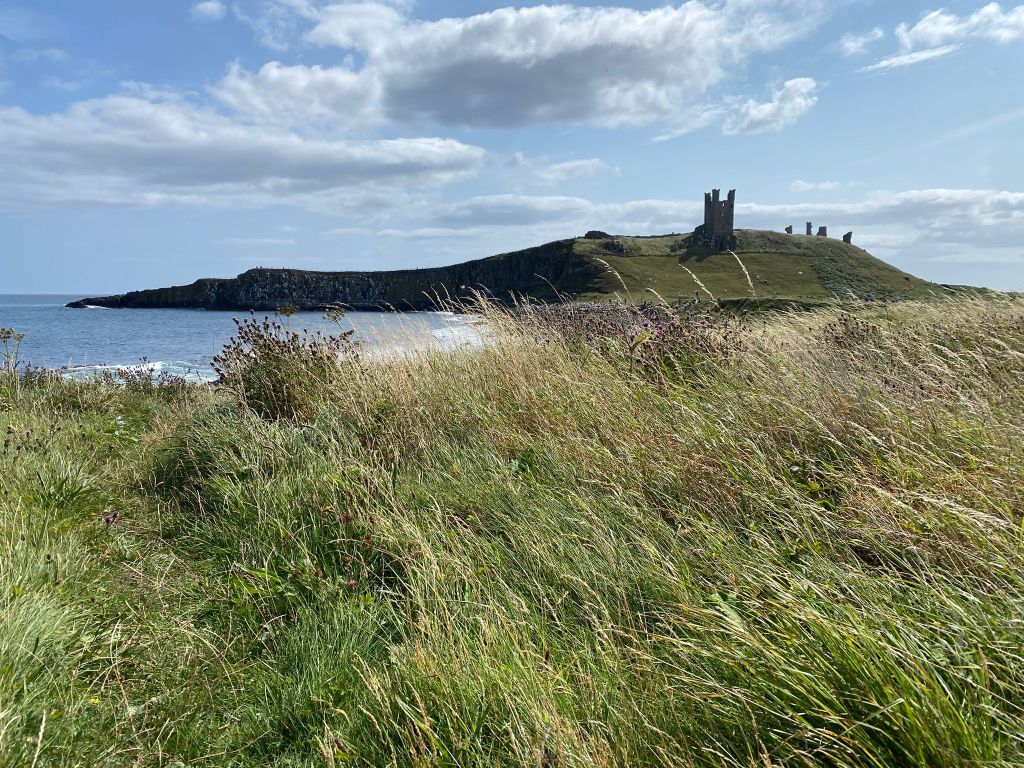
After a spectacular awakening in front of the castle, we are ready to enter Scotland, the first part of our journey is almost over and in another couple of days we arrive in Aberdeen from where we take the night ferry to the Shetland Islands, after 8 days of travel.
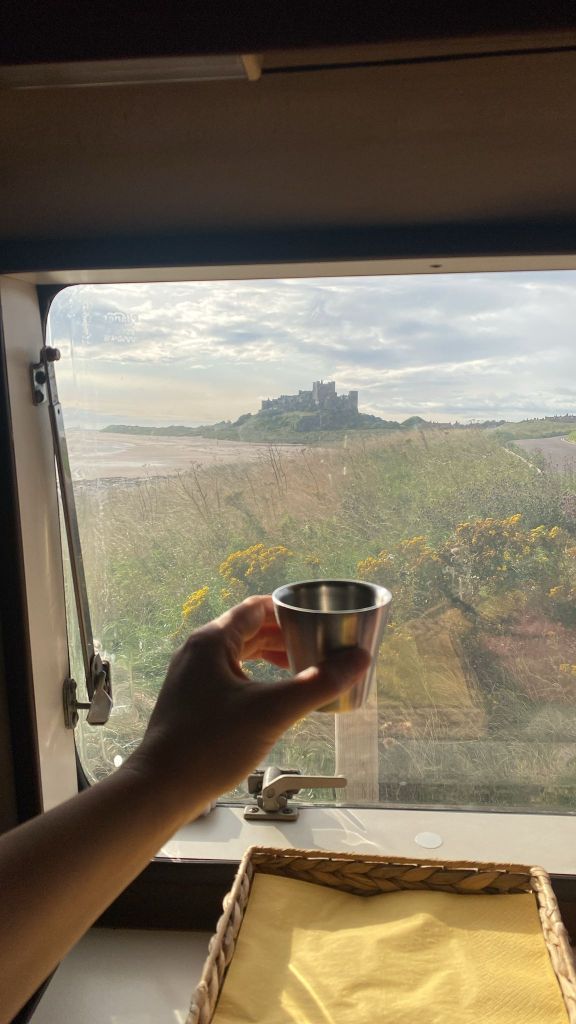
Arrival in Lerwick
We disembark in Lerwick, the capital of the archipelago, greeted by an unusual sun and after a short tour of the town and a mandatory breakfast stop, we begin to think about where to go. Obviously as photographers one of our main goals is to take pictures, but we still didn’t know that the weather would row against us literally every single day. Either the sky is completely clear without even a cloud, or everything is covered without the slightest light, so much so that I took just a few photos that I consider far from beautiful, and the rest with analogue cameras, but on the other hand it can’t always go well, right?
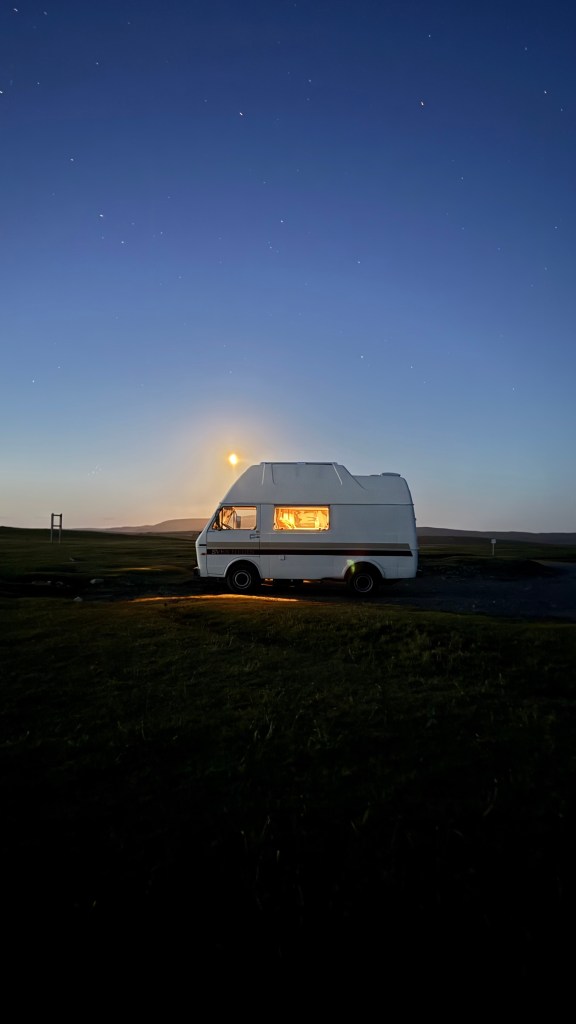
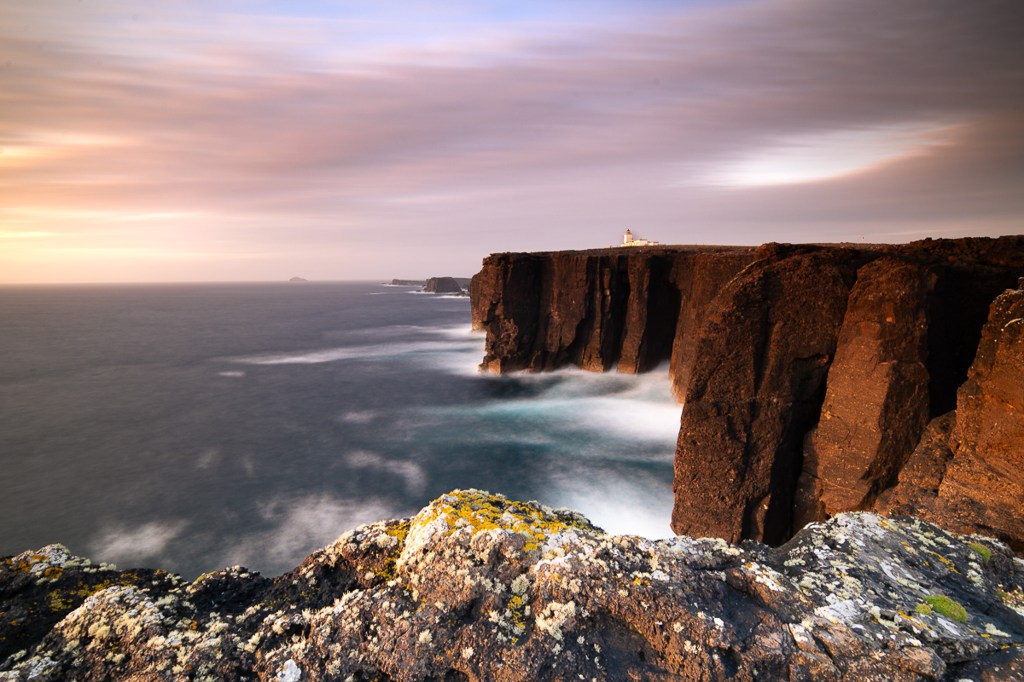
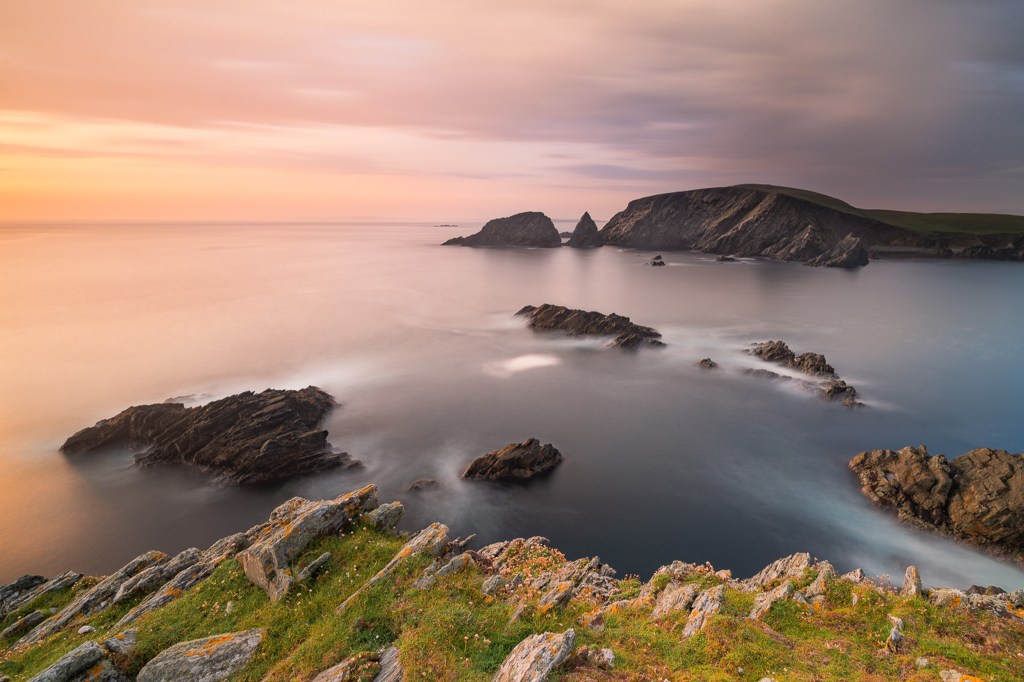
For the next 10 days, we chased absolutely incredible views, lighthouses overlooking the sea, nature reserves rich in local flora and fauna, windswept cliffs, and beautiful beaches, pretty much always with reasonably horrible weather!
We also had the opportunity to explore the cultural part of the islands, and I would like to dwell on this a little more because many times I have heard people ask me, “but why are you going there, it is such a cold and desolate place, there is nothing”, which is the furthest thing from reality.
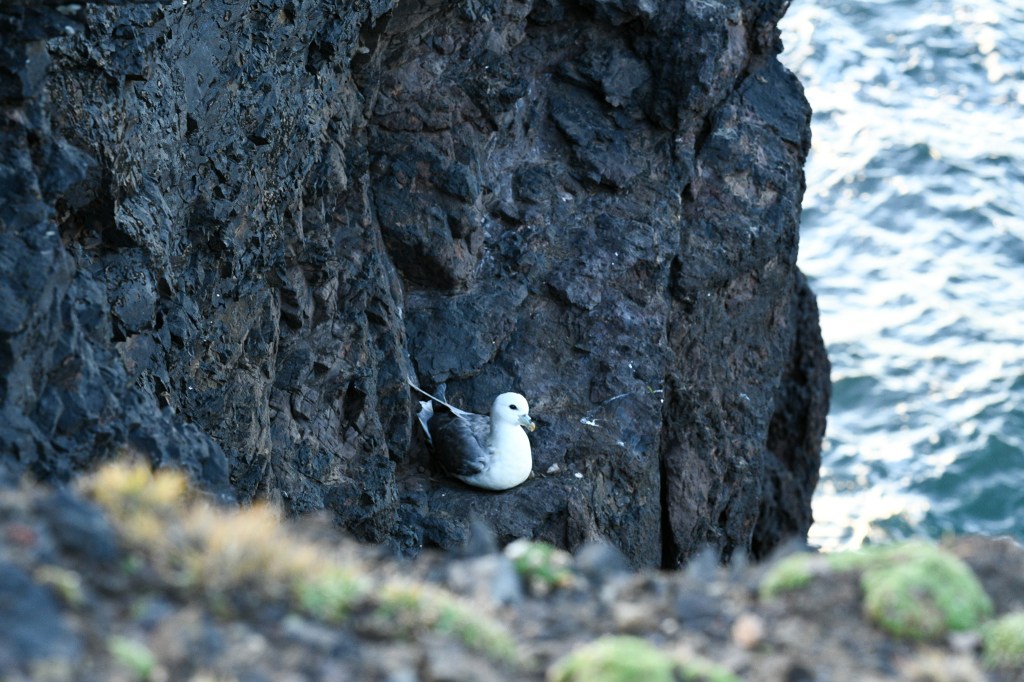
Probably one of the best days I’ve spent in Shetland was the one where I visited the Mousa Broch; A broch is an ancient circular dry-stone tower built in Scotland during the Iron Age (between the 4th century BC and the 2nd century AD). These unique structures are found mainly in northern Scotland, in Orkney, Shetland and the Hebrides, and were used both as fortified houses for local chiefs and as symbols of power and defence. The Mousa Broch is the most famous, tallest and best preserved in the world. Located on the uninhabited island of Mousa in the Shetland Islands of Scotland, this Iron Age tower is the only one to retain its original height, about 13 metres, and its internal stone staircase. It appears twice in the Norse sagas; one story tells of a runaway couple who took refuge here after being shipwrecked on their way to Iceland in 900 AD, while another tells that the broch was “an inconvenient place to reach” during an attack. It is located on the island of Mousa, which is privately owned and managed as a nature reserve, and can be reached in about 15 minutes by ferry. Being a nature reserve, it is rich in local fauna, such as the colony of over 6,000 pairs of petrel storms, seabirds found especially in this archipelago.
After visiting this beautiful island and the broch, returning to the mainland by ferry we also saw some fin whales, which made the day even more magical.
An even longer return
While the days in Shetland didn’t go as we’d hoped from a photographic perspective, I can’t say they were bad, but sadly, it was time to tackle the eight-day return journey; we didn’t know it yet, but it would become many more.
As soon as we disembark in Aberdeen, the camper starts acting strangely, until it almost stops accelerating altogether and we find ourselves going at 10 kilometres per hour. Despite it being 4pm on Friday afternoon, and the day before the start of a bank holiday that would last until Monday evening, the proverbial kindness of the Scots comes to our rescue and we manage to find a garage willing to check it out. There seems to be some problem with the throttle cable, but they manage, despite the vehicle being very old and not understanding how it works, to fix it and so we leave again.
The next day, everything seems fine until, alarmed by a new noise, we stop at a lay-by; once we stop (fortunately), we realize what the problem is: the throttle cable has broken.
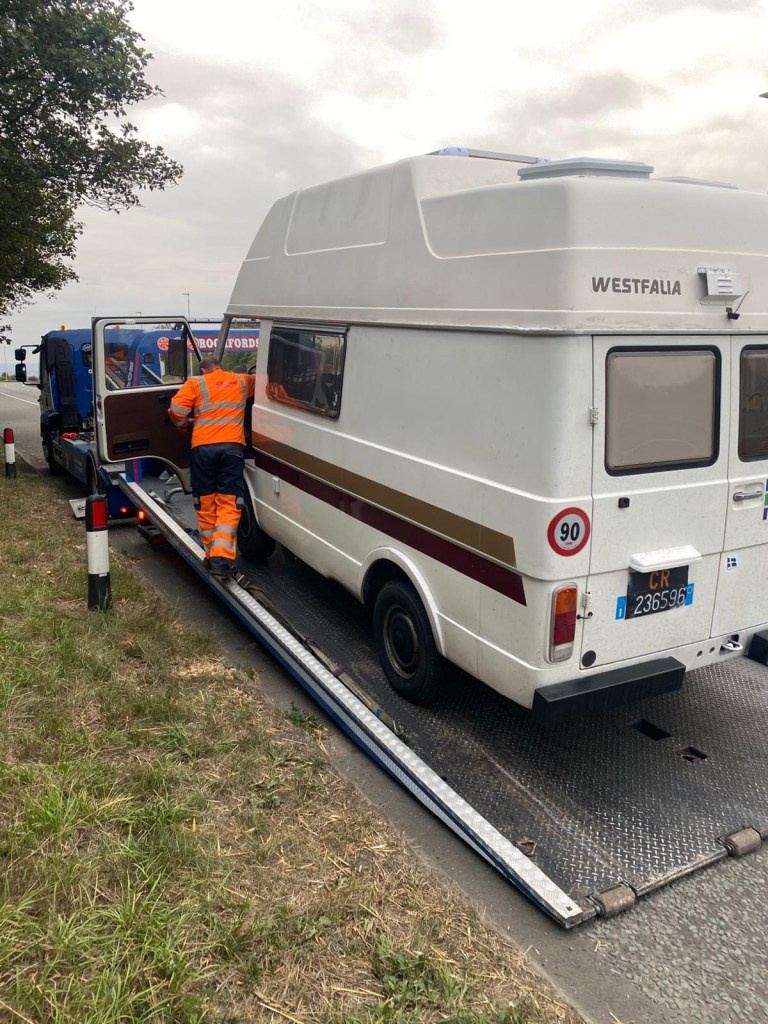
Obviously, we are unable to continue and obviously, as mentioned before, we are in the middle of a national holiday! After about eight hours on the phone with our insurance company, we finally manage to get picked up by a tow truck which, again thanks to the proverbial kindness of the people of the United Kingdom, even gives us a lift to the nearest hotel.
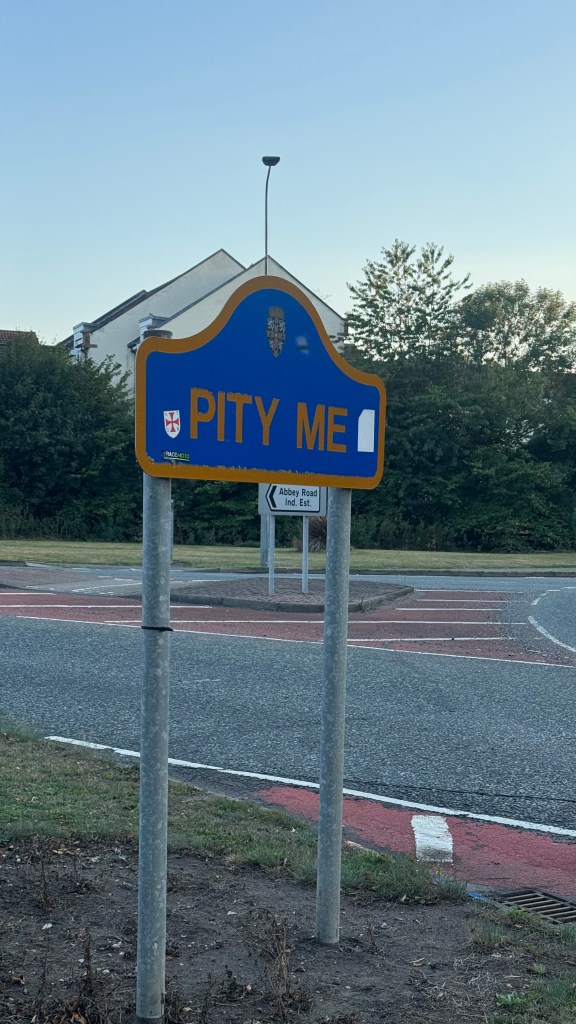
In this hotel in the middle of nowhere, in a charming small town called Pity Me, and yes, here we really thought the universe was vaguely mocking us, we spent a whopping 6 days. After countless rounds of calls and days filled with boredom and desperation we managed to get going again but from here on for the next 4 days, Sven had one breakdown after another, including the dead battery at passport control when boarding the ferry to France, he was probably fed up with all those miles!
The last few days have been a nice delirium of constant rain, breakdowns, fear of having to stop again and general tiredness but in the end, we managed to return safe and sound.
What I learned from this adventure
Carrying a spare throttle cable with me when I travel! Jokes aside, the trip was absolutely epic a year later and with a clear mind, but we probably wouldn’t do it again! Our Sven is an extraordinary vehicle, arriving here intact after 50 years of road history, but it certainly lends itself more to slow, close-to-home journeys, certainly not to traveling 600 kilometres a day to reach Europe’s most remote islands. It was our first real camper, and we loved our semi-disastrous adventure but it’s probably not the right vehicle for us, or maybe it would be if we could invest a fair amount in improving its mechanics, but at the moment it isn’t. That’s why we decided to put it up for sale, including all the stickers and flags he earned from this trip!